
Coping Skills · Online Throughout Texas
Coping Skills Therapy in Texas: Tools That Work When You Need Them
Everyone has ways of getting through hard moments. Some help, some backfire, and some just stop working. I help adults across Texas build a flexible toolkit for emotional regulation that fits their real lives.
- Free phone consultation
- Secure video, anywhere in Texas
- Texas LMFT #201087

Per session
$200
Does this sound familiar?
You don’t have to have the words for it yet.
- When I'm upset, I either blow up or completely shut down.
- I know what I should do to calm down, but in the moment it all disappears.
- My go-to ways of coping, like scrolling or working late, aren't really helping.
- Small things knock me off balance more than they used to.
- I take care of everyone else and run on empty.
What Coping Skills Therapy Is
Coping skills are the things you do to get through difficult emotions and situations. You already have some. Maybe you call a friend, go for a walk, clean the kitchen, or pour yourself into work. Some of these strategies serve you well. Others bring short-term relief and long-term cost.
Coping skills therapy is about building a wider, more flexible set of tools and, just as important, understanding when and why you reach for them. I offer this work online for adults anywhere in Texas from my Southlake-based practice. It's often part of individual therapy for anxiety, depression, anger, grief, or stress, and it shows up in couples work too, because two overwhelmed people rarely have a productive conversation.
Understanding Your Window of Tolerance
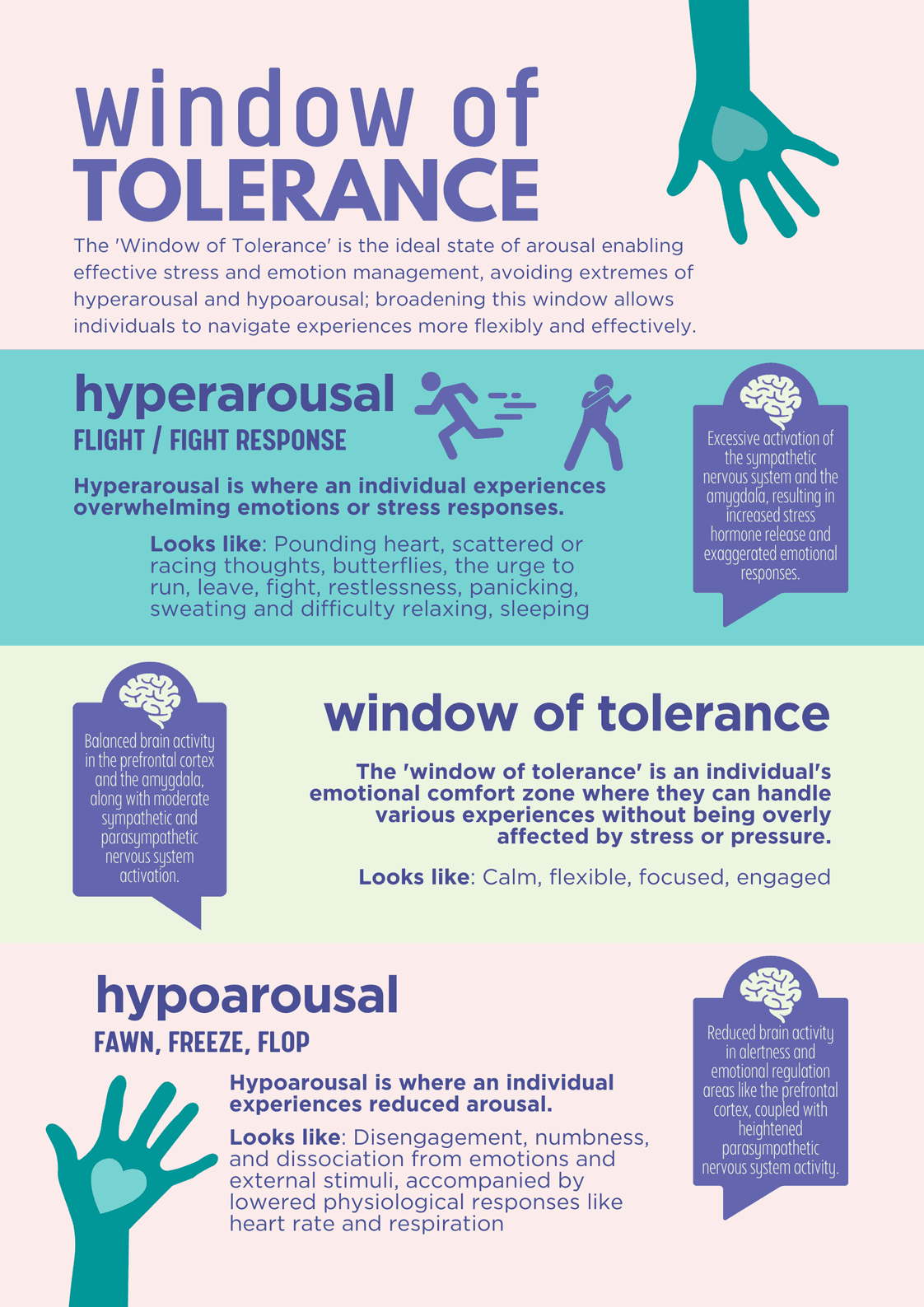
One of the most helpful maps I share with clients is the window of tolerance, a term coined by psychiatrist Dr. Dan Siegel. It describes the zone in which you can feel your feelings and still think clearly.
- Inside the window, you can feel upset, sad, or frustrated and still stay present. You can listen, problem-solve, and connect.
- Above the window (hyperarousal), your nervous system revs up into fight or flight. You might feel panicky, angry, flooded, or unable to sit still. Your heart races, your thoughts speed up, and you say things you don't mean.
- Below the window (hypoarousal), your system powers down. This can look like freeze, fawn (going along with others to keep the peace), or flop: numbness, foggy thinking, collapse, or feeling far away from yourself.
Everyone moves in and out of the window. Stress, trauma, exhaustion, and old relational wounds can make it narrower, so it takes less to push you out. Therapy can help you recognize where you are, find your way back, and gradually widen the window over time.
When Coping Strategies Backfire
Most of the ways we cope made sense at some point. Staying busy kept you from feeling overwhelmed. Going quiet kept the peace at home. A glass of wine, a late-night scroll, or an extra hour at the office took the edge off a hard day.
The trouble is that many of these strategies work by helping you avoid a feeling rather than move through it. Over time, avoidance tends to shrink your window instead of widening it, and the original stress is still waiting when the distraction wears off. In therapy, we don't shame these habits. We get curious about what they've been doing for you, then add options that offer relief without the hidden cost.
“Regulation isn't about never getting upset. It's about being able to come back.”
Emotional Regulation and Distress Tolerance Skills
Emotional regulation is your ability to notice, understand, and influence your emotional state. It isn't about never getting upset. It's about being able to come back.
Distress tolerance is the capacity to get through an intense moment without making it worse. Some of the skills we might practice include:
- Grounding: naming what you see and hear, feeling your feet on the floor, holding something cold
- Breath and body: slowing your exhale, stretching, or moving to release built-up energy
- Naming the feeling: putting words to an emotion often softens its grip
- Pausing: taking a real break from a heated conversation and agreeing on when you'll return
- Coping ahead: planning for situations you already know will be hard
We'll figure out which tools match your nervous system. If you tend to rev up, you may need something calming. If you tend to shut down, you may need something gently activating.
Self-Soothing vs. Self-Care
I find it helpful to separate two ideas that often get lumped together. Self-soothing is what you do in the moment to calm distress: a warm shower, a favorite song, a comforting text. It's reactive, and it matters.
Self-care is proactive. It's the routine of sleep, nourishing food, movement, connection, and rest that you practice before the hard moment arrives. When you tend to your needs regularly, your natural distress tolerance increases, so you're better equipped when distress shows up. Self-care is also often the harder choice, like going to bed on time instead of watching one more episode. I wrote more about this in Self-Care: It's Not Just a Buzzword After All.
Both are worth building. Many people are good at one and neglect the other.
Why Coping Skills Alone Aren't Always Enough
Skills are easier to use when you understand what you're coping with. If the same situations keep knocking you out of your window, we'll get curious about why. Using mindfulness and parts work (IFS), we can explore what your reactions are protecting and what earlier experiences they're connected to. As that becomes clearer, the skills stop feeling like a script and start feeling like something you can actually reach for.
This is the same approach I take with anger and anxiety: understanding first, then tools that stick.
If you'd like to build a steadier relationship with your emotions, reach out for a free phone consultation. We'll meet online, from wherever in Texas you are.
What I draw from
- Mindfulness
- Cognitive therapy
- Internal Family Systems (IFS)
- Distress tolerance skill-building
- Compassion-focused therapy
- Trauma-informed care
Curious how these fit together? Read more about my training.
How it begins
Three simple steps to get started
- 01
A free phone consultation
We talk briefly about what’s bringing you in and whether I’m the right fit. For couples, this call is required before a first appointment.
- 02
Your first session, online
You join a secure SimplePractice video session from anywhere in Texas. We start getting to know your story, your patterns and your goals.
- 03
Steady, honest work
Weekly sessions to start build momentum. As things improve, we space them out. You set the pace; I help you keep it.
Sessions are private-pay. I’m out of network with all insurance companies, and I can give you a receipt to submit for out-of-network reimbursement. See rates & insurance.
What does coping skills therapy in Texas look like online?
Sessions happen over secure video from wherever you are in Texas. We talk through recent moments when you felt overwhelmed, identify what happened in your body and mind, and practice skills right there in session. Video works well for this, because you're learning to regulate in your real environment, the same place you'll need these tools most.
What is the window of tolerance?
It's the zone of arousal where you can feel emotions and still think, listen, and respond. Above it is hyperarousal (fight or flight), where you feel flooded or panicky. Below it is hypoarousal (freeze, fawn, or flop), where you feel numb or shut down. Therapy helps you notice where you are and gradually widen your window.
Is self-soothing a bad thing?
Not at all. Self-soothing is an important skill for calming down in the moment. The problem comes when it's the only tool you use, or when it turns into avoidance, like numbing out every night. Pairing self-soothing with proactive self-care builds your resilience over time, so you need to soothe less often.
How quickly will I learn new coping skills?
You'll likely leave your first few sessions with something practical to try. Making skills automatic takes longer, because they have to be practiced when you're calm before they're available when you're upset. Many people notice changes within the first 6 to 8 sessions, though everyone's pace is different.
Can couples work on coping skills together?
Yes. When both partners understand their own window of tolerance, conflict changes. You learn to recognize when one of you is flooded, take a real break, and come back to the conversation. I often weave regulation skills into couples therapy, and couples sessions are $230.
Keep exploring
You might also be looking for

Anxiety
Understand your triggers, quiet racing thoughts, and feel steadier in your body and your relationships.
Learn more
Anger
Get to the root of your anger, regulate in the moment, and protect the relationships that matter most.
Learn more
Mindfulness & Self-Awareness
Become more present, curious, and self-aware, so you can respond to life instead of reacting to it.
Learn more
Individual Therapy
Online therapy for adults across Texas, built on self-awareness, self-compassion, IFS, EMDR and mindfulness.
Learn more
Online across Texas
Ready when you are.
Reaching out is the hardest part. A short, free phone call is all it takes to see whether we’re a good fit, with no pressure and no paperwork.
Prefer email? shameela@therapywithshameela.com