
Premarital Counseling · Online Throughout Texas
Online Premarital Counseling for Engaged Couples Throughout Texas
I don't offer a packaged premarital program, but I will work with you to prepare for your lifelong, loving commitment. Online, for engaged and committed couples anywhere in Texas.
- Free phone consultation
- Secure video, anywhere in Texas
- Texas LMFT #201087
Per session
$230
Does this sound familiar?
You don’t have to have the words for it yet.
- We're happy, so why does everyone keep telling us to do premarital counseling?
- We've never really talked about money, kids, or whose family gets which holiday.
- Our families come from different faiths or cultures, and wedding planning is already showing the cracks.
- My parents have strong expectations about what our marriage should look like.
- We don't fight often, but when we do, it gets big fast.
Online premarital counseling, without a script
A wedding is one day. A marriage is thousands of ordinary days, plus a handful of very hard ones. Premarital counseling is a chance to build the foundation for both while things are still mostly good.
I want to be clear about what I offer. I don't run a packaged premarital curriculum, a workbook, or a set number of sessions. Instead, I work with engaged and committed couples using the same approaches I bring to my couples and marriage therapy, focused on preparing you for a lifelong, loving commitment.
That means our conversations are shaped by the two of you, not by a checklist. If money is the sore spot, we'll spend time there. If you're quietly dreading the first holiday season with both families, we'll talk about that instead.
I offer premarital counseling online for couples anywhere in Texas, from my Southlake-based practice. Sessions happen from your own living room, which is fitting, since that's where most of your marriage will actually happen.
What we'll talk about before you say "I do"
Every couple is different, but these are the conversations that tend to matter most:
- Conflict. How each of you fights, how you shut down, and how you repair. Disagreements are normal. What matters is what happens next.
- Money. Spending and saving styles, debt, joint versus separate accounts, and financial obligations to parents or extended family.
- Family of origin. What each of you learned growing up about love, anger, affection, and apology, and which of those lessons you want to keep.
- Faith and culture. What you believe, how you'll practice (or not), and how you'll honor both backgrounds in your home.
- Intimacy. Expectations about affection and sex, differences in desire, and how comfortable you are talking about any of it.
- Roles. Careers, household labor, whose job takes priority, and who moves for whom.
- Children. Whether, when, and how many, and how you'd want to raise them.
- In-laws and extended family. How involved they'll be, where the boundaries are, and how you'll handle it when you don't agree.
You don't have to agree on everything. You do need to know where you differ and have a way to talk about it. If talking itself is the hard part, you might also look at communication problems.

Interfaith, intercultural, and South Asian couples
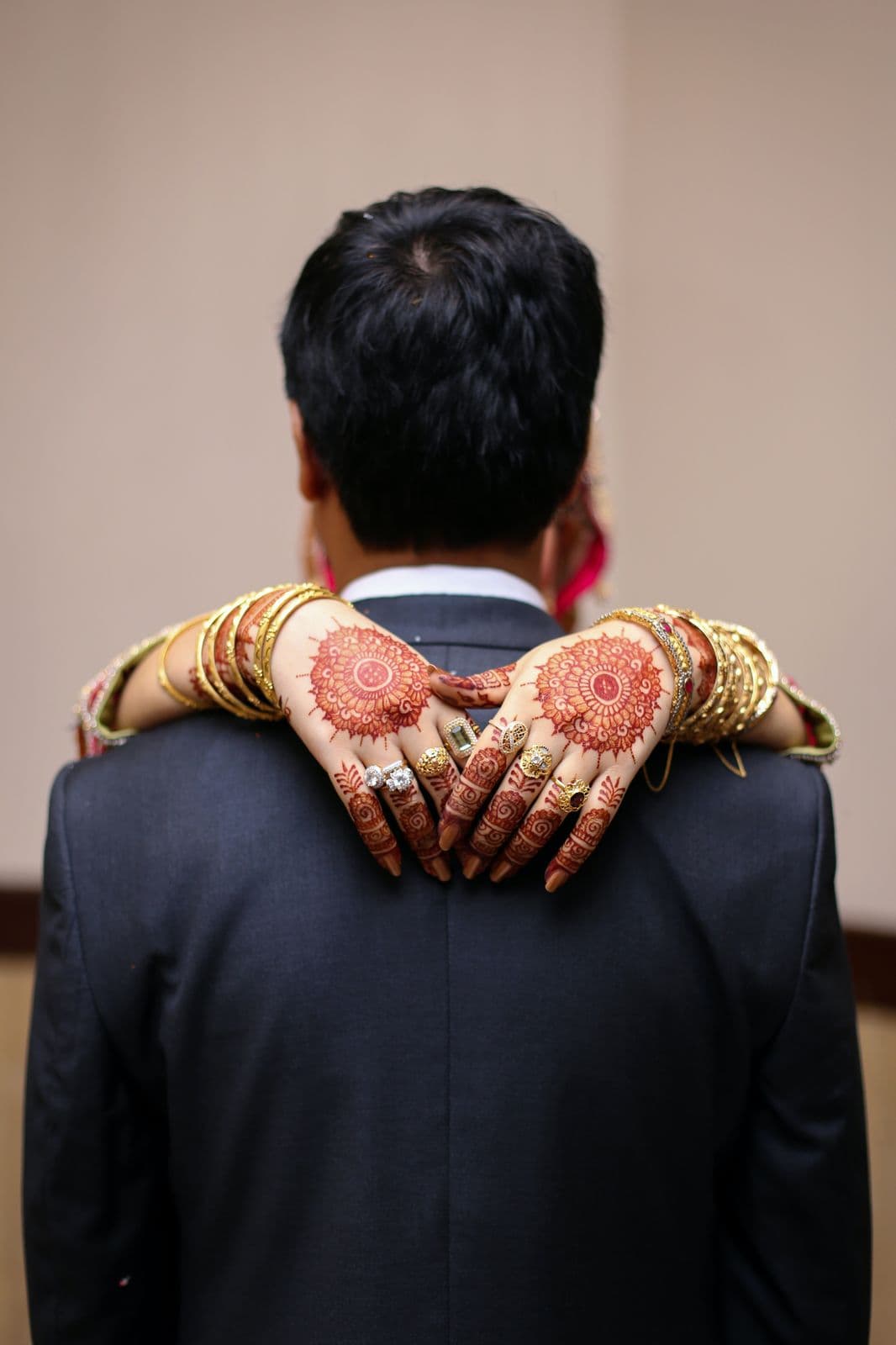
Marrying across faiths, cultures, or communities brings real richness, and real negotiation. Questions like which traditions you'll observe, how you'll raise children, or what to say to a grandparent who hoped you'd marry within the community deserve thoughtful conversation before the wedding, not after.
I work with many South Asian couples and understand South Asian family and community dynamics: parents who are deeply involved in decisions, expectations about living near or with family, wedding plans that grow to include hundreds of guests and opinions, and a strong sense of duty to care for aging parents. I also work with Muslim couples (Ismaili, Sunni, and Shia), including couples whose families practice differently from one another.
My aim is never to pick a side between you and your families. It's to help the two of you get clear on what you want your marriage to look like, and to support you in holding that with love when others have different ideas. Sessions are in English. You can read more on my multicultural issues and spirituality pages.
“A wedding is one day. A marriage is thousands of ordinary days, plus a handful of very hard ones.”
How I work with engaged couples
My work with premarital couples draws on the Gottman Method, in which I've completed Level 1 training, along with Emotionally Focused Therapy, mindfulness, and practical skill-building. In practice, that looks like:
- Gottman-informed conversations about friendship, managing conflict, and the shared meaning you want to build together
- Noticing the attachment needs underneath your disagreements, like wanting to feel chosen, safe, or respected
- Learning to pause and get curious when you're triggered, rather than reacting on autopilot
- Practicing new ways of talking to each other in session, with me there to coach
You'll talk to each other more than you talk to me. I may suggest conversations to continue at home between sessions. The point is to spot your patterns early, while they're still flexible, and to resolve conflict in ways that leave you closer instead of further apart.
When to start, and what to expect
Ideally, start several months before your wedding, so you aren't trying to process big questions in the same week as the final dress fitting. That said, there's no wrong time. Some couples start right after the engagement, and others come in during the first year of marriage.
As with all new couples, I require a free phone consultation before your first appointment, and both partners attend from the start. I recommend weekly sessions at first. On average, couples attend a minimum of six to eight sessions, though you're welcome to continue longer if it's helpful. Sessions are $230 for 45 to 55 minutes, and I'm out of network for all insurance.
You don't need to be getting married to do this work. I see couples who are moving in together, committing to a long-term partnership, or blending families. I welcome same-gender couples and couples with a nonbinary or transgender partner. Sessions are held on my secure telehealth platform.
A few questions to start with at home
If you'd like a head start, try one of these over dinner. Not all at once.
- What did arguments look like in your house growing up, and how did they end?
- How much should our parents know about our finances, our fights, or our plans?
- What does a good Sunday look like to you ten years from now?
- When you're hurt, what do you most need from me, and what makes it worse?
- Which family traditions feel essential to you, and which are you happy to let go?
Notice not just the answers, but how it feels to ask. If a question gets tense quickly, that's a good one to bring into session.
Is it a bad sign if we're struggling before the wedding?
No. Wedding planning is one of the most stressful projects many couples ever take on together, and it tends to bring every family dynamic to the surface at once. If you're arguing more than usual, that isn't a sign you're wrong for each other. It's information about where you'll need support.
Coming to premarital counseling isn't an admission that something is broken. It's a decision to take your marriage as seriously as you're taking the wedding.
What I draw from
- Gottman Method
- Emotionally Focused Therapy
- Mindfulness
- Internal Family Systems
- Communication & coping skill-building
Curious how these fit together? Read more about my training.
How it begins
Three simple steps to get started
- 01
A free phone consultation
We talk briefly about what’s bringing you in and whether I’m the right fit. For couples, this call is required before a first appointment.
- 02
Your first session, online
You join a secure SimplePractice video session from anywhere in Texas. We start getting to know your story, your patterns and your goals.
- 03
Steady, honest work
Weekly sessions to start build momentum. As things improve, we space them out. You set the pace; I help you keep it.
Sessions are private-pay. I’m out of network with all insurance companies, and I can give you a receipt to submit for out-of-network reimbursement. See rates & insurance.
Do you offer a structured premarital counseling program?
No. While I don't offer a specific program for premarital couples, I will work with you to prepare for your lifelong, loving commitment. I use the same Gottman-informed and Emotionally Focused approaches I use in couples therapy, and we focus on the conversations that matter most to the two of you rather than a fixed curriculum.
Do you offer premarital counseling in Southlake, TX, or only online?
My practice is based in Southlake, and all premarital counseling sessions are online. That means engaged couples anywhere in Texas can work with me from home, as long as you're both physically in Texas during sessions. Many couples find it easier to fit into busy wedding-planning schedules than driving to an office.
How many premarital sessions do we need?
There's no fixed number. On average, couples attend a minimum of six to eight sessions, and some choose to continue longer or check in again after the wedding. I recommend weekly sessions at first so we can build momentum. We'll talk about your goals and timeline during your phone consultation.
Will your sessions qualify us for the Texas marriage license discount?
Texas offers a reduced marriage license fee for couples who complete a state-registered premarital education course. Because I don't run a structured premarital course, please don't plan on my sessions to qualify. Some couples complete a registered course for the discount and come to me for deeper, personalized conversations. Feel free to ask during your consultation.
Do you work with interfaith, intercultural, or South Asian couples?
Yes. I work with many interfaith and intercultural couples, South Asian couples, and Muslim couples (Ismaili, Sunni, and Shia). I understand the role family and community expectations can play in a marriage, and I'll help the two of you decide what you want without asking you to reject where you come from. Sessions are in English.
We aren't engaged yet. Can we still come?
Absolutely. You don't need a ring or a wedding date. I work with couples who are seriously dating, moving in together, or thinking about a long-term commitment. Doing this work before you decide can actually make the decision clearer. I welcome same-gender couples and couples with a nonbinary or transgender partner.
We're already married. Is it too late?
Not at all. Many couples realize during the first year or two of marriage that there are conversations they never had. The same work applies, and it's often easier to address patterns early. You can also read about my couples and marriage therapy if you'd like ongoing support.
Keep exploring
You might also be looking for

Couples & Marriage Therapy
Online couples therapy and marriage counseling for couples anywhere in Texas, from my Southlake practice.
Learn more
Multicultural Issues
Therapy for first-gen adults, immigrant families, and intercultural couples that sees the systems around you.
Learn more
Culture & Spirituality
Culturally attuned therapy for South Asian and Muslim couples and adults. Faith welcome, never imposed.
Learn moreCommunication Problems
Break the pursue-withdraw cycle, soften hard conversations, and learn to listen to understand.
Learn more
Online across Texas
Ready when you are.
Reaching out is the hardest part. A short, free phone call is all it takes to see whether we’re a good fit, with no pressure and no paperwork.
Prefer email? shameela@therapywithshameela.com