
Culture & Spirituality · Online Across Texas
South Asian & Muslim Therapist for Couples and Individuals in Texas
Culturally attuned therapy for South Asian and Muslim couples and adults, online anywhere in Texas. Bring your faith, your doubts, your family, and your whole story. I won't ask you to leave any of it at the door.
- Free phone consultation
- Secure video, anywhere in Texas
- Texas LMFT #201087

Format
Online · TX
Does this sound familiar?
You don’t have to have the words for it yet.
- My parents and in-laws have opinions about everything in our marriage, and I don't know how to set limits without dishonoring them.
- I'm worried someone from jamatkhana or the masjid will find out I'm in therapy.
- We come from different faiths, or different levels of practice, and it's starting to matter more than we expected.
- I'm questioning beliefs I grew up with, and I feel guilty even saying that out loud.
- I want a therapist who already understands 'what will people say' without me having to explain it.
Culturally attuned therapy for South Asian and Muslim clients in Texas
I welcome your diversity. I am comfortable working with people of varying backgrounds, experiences, and faiths, and I have worked extensively with South Asian clients (English-speaking only) and with Muslims from Ismaili, Sunni, and Shia communities. I have also worked with many atheists, agnostics, and people who describe themselves as spiritual but not religious.
That range matters. Culture and faith shape how you love, how you fight, what you owe your family, and what you feel allowed to want. When a therapist doesn't understand that, you spend half your session translating. When they do, you can get to the part that actually hurts.
As a South Asian woman, I understand a lot about South Asian family and community dynamics without needing a glossary. I also know that no two families are alike, and that my experience is not your experience. So I stay curious. You are the expert on your culture, your faith, and your family. My job is to help you see the patterns and find a way forward that fits who you are.
I offer this as online couples therapy and individual therapy for clients anywhere in Texas, from my Southlake-based practice.
Faith in the room, on your terms
Some of my clients pray five times a day. Some attend jamatkhana every week. Some haven't stepped into a mosque in years and aren't sure how they feel about that. Some never believed and are tired of being asked why. All of you are welcome here.
I don't impose belief, and I don't treat faith as a problem to be solved. If your relationship with God, your community, or your practice is a source of strength, we can draw on it. If it is a source of pain, confusion, or grief, we can look at that too, gently and without judgment.
Faith transitions deserve particular care. Questioning what you were raised with, becoming more observant than your family, converting, or quietly stepping away can all set off a wave of guilt, fear, and loneliness. It can also strain a marriage when one partner's relationship to faith shifts and the other's doesn't. In therapy, we can make room for every part of you, including the part that still wants to belong and the part that needs to be honest.
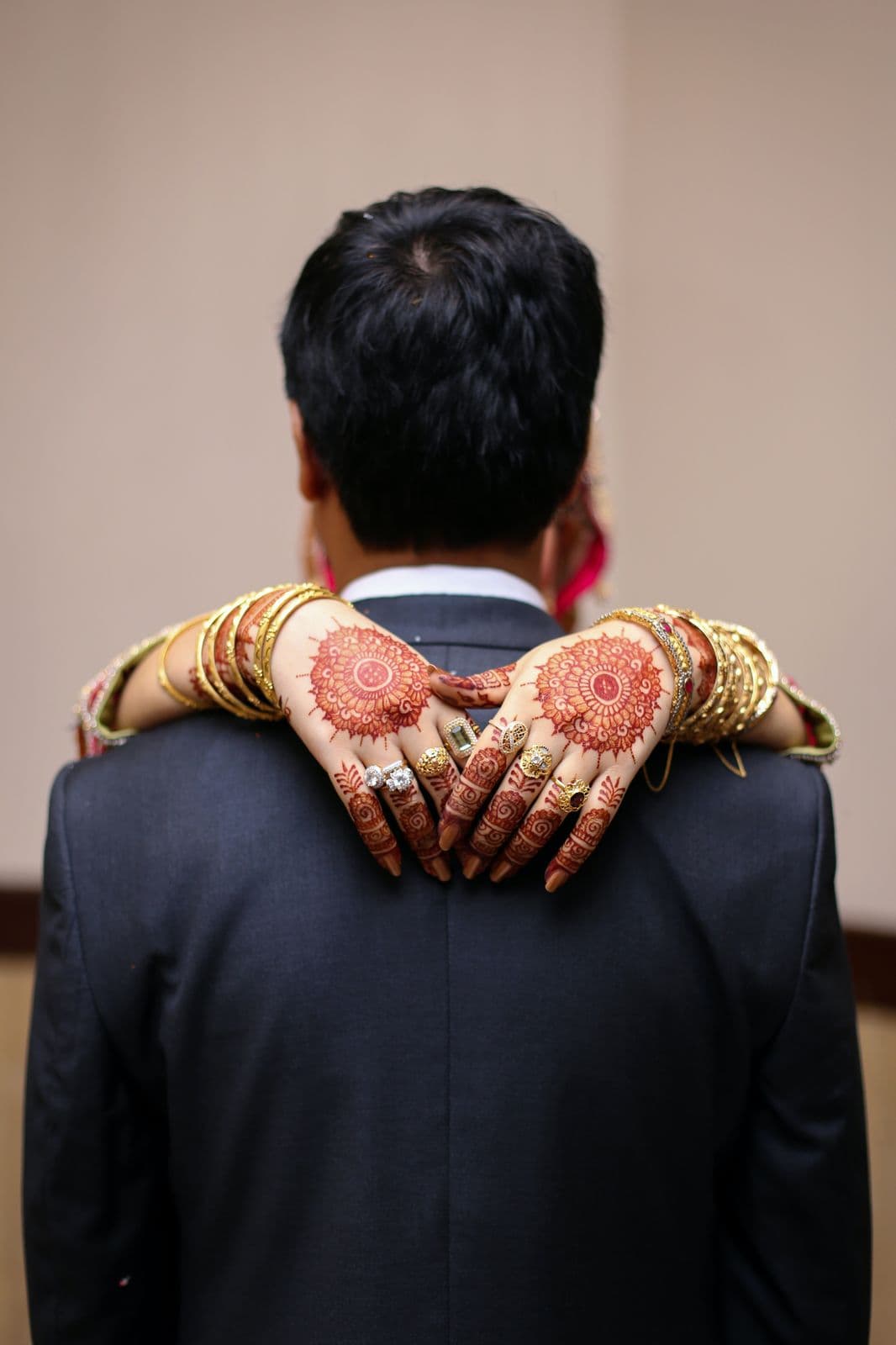
Family, izzat, and “what will people say”
Many South Asian families organize life around closeness, duty, and family honor, or izzat. There is real beauty in that: loyalty, generosity, and showing up for each other through every wedding, illness, and move. There can also be heavy pressure, especially when your choices about marriage, career, children, or faith don't match what was expected.
In my practice, this often shows up as:
- Couples caught between each other and parents or in-laws, sometimes under the same roof in a joint or extended family household
- Marriage expectations, from introductions and arranged or semi-arranged matches to the question of when (and whether) to have children
- Adult children trying to honor their parents while building a life that feels like their own
- Quiet, painful differences around caste, class, sect, or region that families rarely name out loud
- The constant background hum of "what will people say"
I won't ask you to cut off your family or adopt someone else's idea of independence. Boundaries can look different in a collectivist family, and that's okay. We'll work toward the kind of closeness you actually want, with the limits that make it sustainable. If you'd like to bring parents or siblings into the work, family therapy for adult families is an option.
“You shouldn't have to explain your family, your faith, or 'what will people say' before we can get to the part that actually hurts.”
Interfaith and intercultural couples
Love crosses lines that families sometimes can't. Maybe you're Muslim and married to someone who is Hindu, Christian, or not religious at all. Maybe you're both Muslim but from different traditions or countries, or one of you is more observant than the other. Maybe your parents are still not speaking to your partner.
These couples often agree on the big things and still get stuck on the specific ones: which holidays you celebrate and with whom, how you'll raise children, what a wedding should look like, and how much say your extended families get. Underneath the logistics there is usually a deeper question. Can I be fully myself with you and still belong to my people?
Using tools from the Gottman Method and Emotionally Focused Therapy, I help couples slow those conversations down so you can hear the fear and longing under each position. If you're planning a marriage across cultures or faiths, premarital counseling is a wonderful time to start.
Privacy, stigma, and why online therapy helps
In many communities, therapy still carries stigma. You might worry that seeking help means admitting failure, that it will reflect badly on your family, or that someone will find out. Those worries make sense, especially in a close-knit community where everyone seems to know everyone.
DFW has a large and growing South Asian community, with Ismaili jamatkhanas in Carrollton and Plano and many mosques across the Metroplex. Because my practice is fully online, there is no waiting room where you might run into an uncle from jamatkhana or a friend from the masjid. You can meet with me from your car, your office, or a quiet room at home. What you share is confidential within the legal and ethical limits I'll explain at the start. Even card payments appear as "Ivy Labs" on your statement as an added privacy feature. Learn more about how telehealth works.
Sessions are in English. Many clients move between English and Urdu, Hindi, Gujarati, Kutchi, or other languages in daily life, and you're welcome to use a word or phrase when English doesn't capture it. We'll find the meaning together.
How we'll work together
I draw on mindfulness, Internal Family Systems (IFS), Emotionally Focused Therapy, Gottman Method skills, and the systemic lens I trained in as a marriage and family therapist. IFS can be especially helpful when you feel torn: the part of you that wants to please your parents, the part that's angry, the part that's tired of carrying everyone. None of those parts are bad. They're all trying to help.
New couples start with a free phone consultation, which is required before our first appointment. Individual clients are welcome to schedule a consultation too. You'll need to be located in Texas at the time of each session.
What I draw from
- Emotionally Focused Therapy (EFT)
- Gottman Method
- Internal Family Systems (IFS)
- Mindfulness
- Multicultural, systemic family therapy
- Compassion-focused therapy
Curious how these fit together? Read more about my training.
How it begins
Three simple steps to get started
- 01
A free phone consultation
We talk briefly about what’s bringing you in and whether I’m the right fit. For couples, this call is required before a first appointment.
- 02
Your first session, online
You join a secure SimplePractice video session from anywhere in Texas. We start getting to know your story, your patterns and your goals.
- 03
Steady, honest work
Weekly sessions to start build momentum. As things improve, we space them out. You set the pace; I help you keep it.
Sessions are private-pay. I’m out of network with all insurance companies, and I can give you a receipt to submit for out-of-network reimbursement. See rates & insurance.
Questions
Culture & Spirituality: common questions
Are you a South Asian and Muslim-friendly therapist in Texas?
Yes. I've worked extensively with South Asian clients and with Ismaili, Sunni, and Shia Muslims, along with atheists, agnostics, and spiritual-but-not-religious clients. I offer culturally attuned couples and individual therapy online to anyone located in Texas, from my Southlake-based practice. You won't need to explain the basics of your culture or faith before we can get to work, but I'll always ask about your experience rather than assume.
Do I have to be religious to work with you?
Not at all. I don't impose belief. Some clients bring their faith into sessions as a source of strength; others are questioning, have stepped away from religion, or never had one. Whatever your relationship to spirituality, it's welcome, and it's yours to define. If faith isn't relevant to what you want to work on, we won't make it the focus.
Do you offer Muslim marriage counseling in Texas?
Yes. I work with Muslim couples, married and engaged, on communication, conflict, intimacy, in-law dynamics, and differences in practice or belief between partners. I respect the values you bring and help you build a marriage that reflects them. I'm a licensed marriage and family therapist, not a religious scholar, so for questions of religious guidance you may also want to talk with someone you trust in your community.
Will anyone in my community find out I'm in therapy?
Confidentiality is central to my work, with the standard legal and safety exceptions I'll review with you at the start. Because sessions are online, there's no office lobby or parking lot to be seen in. Card payments appear as 'Ivy Labs' on your statement. Many clients find this privacy makes it much easier to begin.
Do you offer sessions in Urdu, Hindi, or Gujarati?
No, sessions are conducted in English. You're welcome to use a word or phrase from another language when English doesn't quite capture what you mean, and we'll explore it together. If you or your partner would be more comfortable in another language, let's talk about it during your free consultation so you can find the right fit.
Can you help with an interfaith or intercultural relationship?
Yes. I help couples talk about faith, holidays, children, weddings, and extended family without one person's identity having to disappear. We look at the fears and hopes under each position so you can make decisions together. If you're not yet married, premarital counseling is a great time to have these conversations.
Keep exploring
You might also be looking for

Couples & Marriage Therapy
Online couples therapy and marriage counseling for couples anywhere in Texas, from my Southlake practice.
Learn more
Multicultural Issues
Therapy for first-gen adults, immigrant families, and intercultural couples that sees the systems around you.
Learn more
Family Therapy
Online family therapy for parents and adult children, siblings and blended families anywhere in Texas.
Learn morePremarital Counseling
Online counseling for engaged and committed couples in Texas preparing for a lifelong, loving commitment.
Learn more
Online across Texas
Ready when you are.
Reaching out is the hardest part. A short, free phone call is all it takes to see whether we’re a good fit, with no pressure and no paperwork.
Prefer email? shameela@therapywithshameela.com